
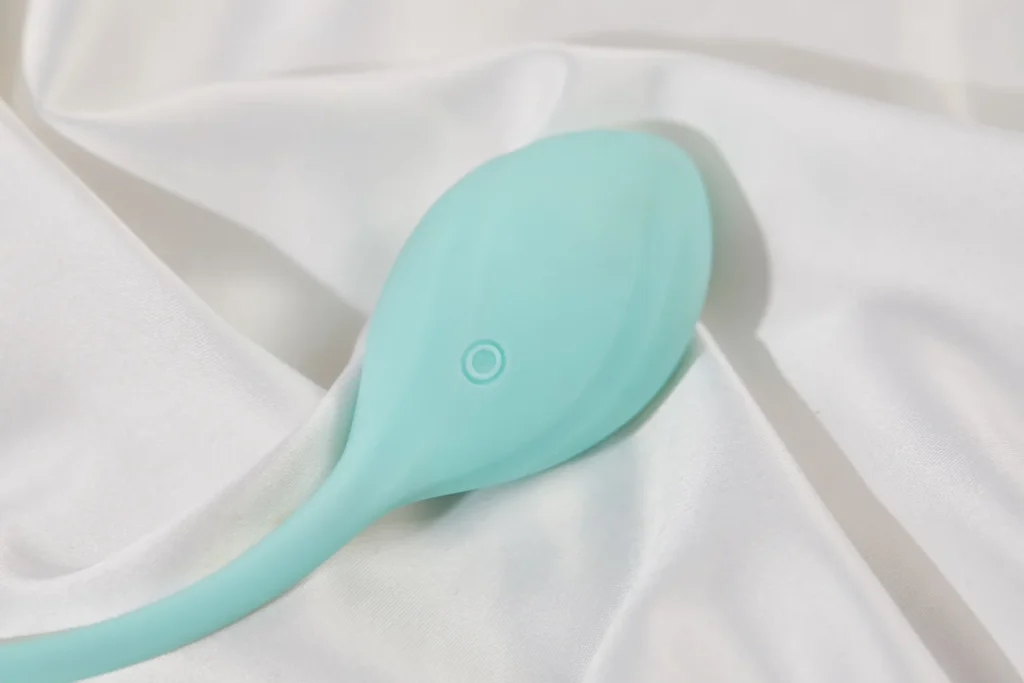
Photo: IFONNX Toys / Pexels. Illustrative device photograph, not a Syloria product or a tested air-pulse comparison. Photo licence.
A bullet vibrator delivers conventional vibration through its contact surface. A suction-style toy commonly uses changing air pressure around an opening. Choosing between them starts with the type of contact you want to explore, how you want to hold the toy, and whether its controls make sense to you.
For a first purchase, a bullet can be a practical option if you want a compact handheld toy and flexible positioning. An air-pulse toy may be worth considering if you specifically want to explore pressure-wave stimulation around an opening. Neither format guarantees a gentler experience or a particular orgasm response.
This guide compares the designs and the questions to ask before buying. It is not a hands-on performance ranking. Individual features must be checked against the exact model’s instructions.
Updated 10 October 2026: comparison tables and practical checks added.
Bullet vibrator vs suction toy at a glance
Use these design differences to narrow your shortlist. Features still depend on the model.
| Check | Bullet vibrator | Air-pulse / suction-style toy |
|---|---|---|
| Mechanism | Conventional vibration through a contact surface. | Changing air pressure in designs such as Pleasure Air; some models also vibrate. |
| Positioning | A handheld contact surface to position within the permitted uses. | An opening and surrounding rim to position as directed. |
| Controls | Check starting setting, mode sequence and off action. | Check air-pulse controls and any separate vibration controls. |
| Care | Check the body, seams and charging connection. | Also check the opening, rim and any removable head. |
| What the name cannot tell you | Minimum intensity, noise or insertion permission. | Fit, hands-free use or a guaranteed response. |
On a small screen, swipe the table horizontally to compare both columns.
What “suction vibrator” actually means
“Suction vibrator” is a common shopping term, but it can hide important differences. A pressure-wave or air-pulse device is not necessarily a conventional vibrator with a stronger motor, and the word “suction” does not tell you precisely how a particular product works.
Womanizer describes its Pleasure Air technology as using changes in air pressure. That explanation applies to its technology. Other manufacturers use different names and designs, so look for a description of the mechanism and the intended contact area in the manual.
Do not assume every product sold under this label has no vibration. Some toys combine more than one type of stimulation. Check whether the controls operate air pulses, vibration, or both, and whether each can be adjusted separately.
A product’s marketing name is a starting point for questions, not a substitute for those answers.
How the contact and positioning differ
A bullet gives you a contact surface to position
A conventional bullet vibrator transfers vibration through the part of the toy touching the body. Within the manufacturer’s permitted uses, the person holding it can change where and how that surface rests.
That may appeal if you want to vary the angle or move a small handheld device rather than position an opening. Think about whether you can hold it comfortably and reach the control without shifting your grip.
The word “bullet” describes a format. It does not establish insertion permission, suitability for anal use, or a particular intensity. Our first-use bullet vibrator guide explains why intended use and comfort need checking before you start.
An air-pulse design adds an opening to position
Many air-pulse designs have an opening that needs to be positioned as the manufacturer describes. The opening’s size, the surrounding rim and the way you hold the handle become part of the choice.
Ask to see the contact end clearly, not just a photograph of the handle. Check whether the rim or head is removable, whether alternative sizes are supplied, and how any removable parts should be cleaned or replaced. These features vary; do not assume they come with every model.
Descriptions such as “contactless” can also be misunderstood. A mechanism may avoid conventional vibration directly at the central contact area while other parts of the device still contact the body. Read the manufacturer’s explanation rather than expecting a completely hands-free or non-contact experience.
Which is easier for a beginner?
Ease depends on the task you want the toy to make simple. A compact size and one button may be appealing, but they are only useful if the grip, operating sequence and starting setting suit you.
Consider these three questions:
- Do you want to move the contact surface around? A handheld bullet may fit that preference. An opening-based design asks you to consider placement and fit more specifically.
- Do you want separate adjustment buttons? Look for the actual button layout. A toy that cycles through settings with one button is different from one with dedicated increase and decrease controls.
- Can you stop it easily? Find the documented off action before use. Check whether it starts at a fixed setting, remembers a previous setting, or uses a different sequence. Do not guess from the number of modes.
If you are uncertain which type of stimulation you want, describe the contact and control you would like to explore before choosing a brand. Our beginner sex-toy guide offers other starting formats too; you do not have to narrow the choice to these two.
Five checks that matter more than a “best” label
1. The first setting and the way settings change
“Ten modes” and “ten intensity levels” are different claims. Modes may change the rhythm as well as, or instead of, the strength. A higher mode count does not establish a lower minimum setting, smoother adjustment or greater power.
If a listing only gives a total number, read the control instructions. Our speeds and patterns guide explains what to look for without equating more settings with better comfort.
2. Grip and access to the controls
Picture holding the device while reaching its button. A slim contact end may be convenient, but a handle that is too short for your grip may not be. For an opening-based device, think about the angle required to keep it positioned and whether the controls remain accessible.
Product dimensions help you judge scale. They do not tell you exactly how a device will feel or whether it will fit every person.
3. Cleaning the whole contact area
Check the cleaning instructions for the body, opening, rim and any detachable parts. A removable head can add a separate cleaning step; a fixed one requires whatever access and method its manufacturer specifies.
Do not transfer another toy’s boiling, soaking or cleaning-agent instructions to the model you buy. “Waterproof” alone does not answer every care question. Look for the actual directions and any limits on the charging connection.
4. Charging and storage
Check which cable is supplied, how it connects and what the permitted power input is. Ask about replacements before buying if the connection is proprietary.
Also check whether there is a documented travel lock and how to use it. A compact design does not prove that feature exists. Turn-off instructions and travel-lock instructions are not interchangeable.
5. Sound, costs and purchase terms
Neither format can be assumed silent. If noise is a deciding factor, ask for information about the exact model and the conditions behind any noise claim. “Discreet” might describe the packaging or appearance rather than the sound.
Compare the full purchase: device, any required charging equipment, removable parts, replacement availability and current seller terms. Check the rules for opened intimate products before buying. Use the current UK or US seller information rather than assuming prices, delivery and returns match across countries.
Where the Syloria Bullet fits
If your preference is conventional vibration in a compact handheld format, the Syloria Bullet is an option to consider. Its official instructions list a 92 × 21 mm body, ABS and silicone, USB recharging, one-button operation and 10 vibration modes.
The documented sequence is straightforward: hold the button for about three seconds to turn it on or off; press it briefly while on to move to the next mode. It is a mode-cycling control, not a claim of independent plus/minus intensity adjustment.
That combination may suit a newcomer who wants a small device and a simple control layout. It does not prove that the lowest setting will suit everyone, that the device is silent, or that it reproduces pressure-wave stimulation. Read the instructions and decide whether the operation matches your preferences.
If air-pulse stimulation is the feature you specifically want, choose a device documented to provide it. This guide does not present Syloria as that type of product. The linked Syloria product page identifies its UK purchase route; this comparison does not confirm US stock or delivery.
A shortlist you can actually use
Choose the preference that matters most to you, then check the matching details. These are shopping prompts, not tested product rankings.
| Your preference | Start by comparing | Before deciding |
|---|---|---|
| Move a small contact surface | Handheld bullet designs. | Grip, permitted contact areas and reachable controls. |
| Explore an opening-based design | Documented air-pulse designs. | Opening dimensions, head options and positioning instructions. |
| Adjust one step at a time | Actual button layouts in either category. | Dedicated increase/decrease buttons versus mode cycling. |
| Keep care straightforward | The exact parts and care directions. | Cleaning access, detachable parts and drying requirements. |
If you are also comparing conventional vibration formats, see bullet vs wand vibrators or bullet vs rabbit designs.
Frequently asked questions
Is an air-pulse toy just a more powerful bullet vibrator?
No. The comparison concerns different mechanisms and contact designs. A mode count or a marketing word such as “powerful” cannot establish equivalence between vibration and changing air pressure.
Are suction toys always hands-free?
No universal hands-free feature follows from the category name. Check how the exact design is meant to be held and positioned. A seal or opening does not itself prove hands-free operation.
Which one is better for couples?
Consider who will hold it, whether its shape leaves room for the contact you want, and whether the controls are reachable. Agree on a way to pause. For the broader conversation about choosing together, see our beginner toys for couples guide.
What if either type feels uncomfortable?
Stop using it rather than increasing the setting or pushing through discomfort. Syloria’s instructions specifically say to stop for pain, irritation or discomfort and seek medical advice if symptoms persist. Follow the equivalent safety advice for any other model you use.
Sources and approach
Prepared by Syloria from manufacturer documentation and a comparison of published buying guides. We have not tested the products against each other. Sources checked on 5 October 2026:
- Syloria Bullet instructions — this model’s dimensions, materials, controls and cautions.
- Womanizer: how its technologies work — manufacturer description of Pleasure Air; not independent evidence of comparative clinical outcomes.
- SVAKOM: vibrator vs suction toy — manufacturer’s comparison guide, read as editorial context rather than a universal product specification.