
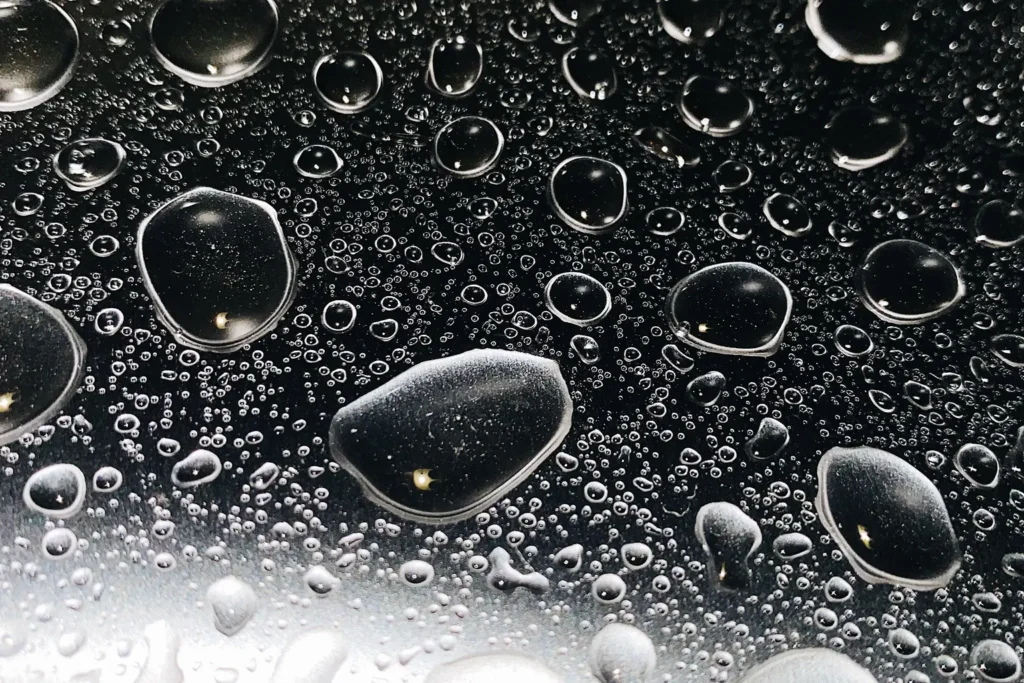
A water-based lubricant can feel tackier as its wet layer dries during use. That does not happen identically with every formula, and a sticky feeling alone cannot tell you whether a bottle is expired, whether an ingredient caused a reaction or whether a toy is damaged. Pause when glide is no longer comfortable, then check the product directions rather than pushing through friction.
The most useful first question is: what feels sticky — the lubricant during use, the product straight from its bottle, or the toy after cleaning? Each leads to a different next step.
By Syloria · Sources checked 20 October 2026. For adults aged 18 and over. Product-use information, not a diagnosis.
Why a water-based formula can change feel
Water-based does not mean water only. For example, ASTROGLIDE Water-Based Liquid lists purified water alongside glycerin, propylene glycol and polyquaternium-7. The full formula matters when comparing products; the base name does not describe every ingredient or predict your experience.
Lubricant manufacturer Trigg Laboratories notes that water-based formulas may dry during use. As the wet layer diminishes, the feel can change. This explains why reapplication may be relevant; it does not establish a universal time limit for one application.
Be careful with ingredient shortcuts. Seeing glycerin on a label does not let us conclude that it caused your particular texture problem or any symptoms. Nor can a claim such as “non-sticky” tell you how a product will feel in every situation. A label describes a formula; it cannot replace noticing when something is uncomfortable.
Identify where and when the change happens
Make the observation before choosing a remedy. You do not need to repeat an uncomfortable experience to collect more information.
| Your observation | Information worth checking | What it does not establish |
|---|---|---|
| The lubricant starts slippery, then feels tackier during use | Exact formula, amount and reapplication directions | A specific ingredient allergy or an expired bottle |
| It already looks or feels different when dispensed | Use-by date, storage directions, closure condition and any manufacturer advice on changes | That adding water will restore the original product |
| The toy remains sticky after its instructed cleaning and drying | Toy material, care instructions and manufacturer support | That lubricant residue is definitely the cause |
| There is burning, soreness or pain | Stop the activity; seek appropriate health advice rather than treating it as a texture test | That switching to a thicker gel will solve the symptom |
Treat an unexpected persistent toy-surface change as a separate product question. Set the device aside and ask its maker about the exact condition. Do not assume the same explanation applies to a drying lubricant film and a clean device that still feels different.
Reapplication starts with the bottle’s directions
If the issue is reduced glide without symptoms, read the application instructions for your exact lubricant. Use the directed amount and reapply as directed when needed. There is no useful universal rule such as one drop, one pump or one application per session: those measures are not interchangeable between bottles.
Also check that the lubricant is appropriate for the intended activity, your exact toy and any barrier being used. For example, the current US ASTROGLIDE Liquid page specifies natural rubber latex condoms only. That is a model-specific label statement, not permission to extend the claim to every condom or every product carrying the same brand name.
For the broader compatibility decision, use our guide to choosing lubricant for a vibrator. Here, the aim is to understand a change during use after compatibility has been checked.
Should you add water to make it slippery again?
Some manufacturer education discusses reactivating water-based lubricant with water. Trigg’s guide is one example. That general discussion is not a mixing instruction for your particular bottle. Look for clear directions from the maker of the formula you own. If they do not explain reactivation, ask rather than applying an internet ratio.
Keep these questions separate:
- “May I add water to the applied product as this maker directs?”
- “May I dilute the remaining contents of the bottle?”
Permission for the first does not establish permission for the second. This guide does not recommend refilling or diluting a bottle, adding saliva or combining formulas. It also does not provide a homemade lubricant recipe.
A useful message to the manufacturer is: “I have [exact product name and size]. It loses glide during use. Do your directions allow reactivation, and if so, how? Should I reapply the original formula instead?” Include a batch or lot number if the packaging has one and they request it.
Read the date on the actual package
Do not decide shelf life from the fact that a lubricant feels tacky. pjur’s FAQ directs customers to the actual use-by date on its product packaging. A brand’s general shelf-life range is not a replacement for your bottle’s date or any instructions applying after opening.
Before another use, check the printed date and storage guidance. If the seal, closure or contents have changed unexpectedly, set the bottle aside and contact the maker or seller. Avoid trying to correct an unusual smell, appearance or consistency by mixing in something else.
For a useful support enquiry, keep a photograph of the label, the exact product name, any lot number, approximate opening date and a short description of what changed. Send packaging information rather than intimate photographs or unnecessary health details.
When a health question takes priority
If use is painful or irritating, stop; do not continue trying products simply to identify the “right” texture. Persistent or recurring symptoms deserve advice from a qualified healthcare professional. A product-use article cannot identify whether the cause is a lubricant, friction, a skin condition or something else.
For vaginal dryness specifically, the NHS advises seeing a GP when it has continued for a few weeks despite self-care, affects daily life, or occurs with unusual discharge or certain bleeding. US readers can discuss these concerns with their own clinician. The same NHS guidance advises against using creams or lotions inside the vagina when they are not intended for that purpose.
These are reasons to seek individual assessment, not grounds to diagnose yourself from a bottle’s ingredient list. This article does not recommend a lubricant as treatment for an infection or promise that a “sensitive” label prevents reactions.
What does this mean for a Syloria Bullet?
The Syloria Bullet instructions list ABS and silicone, and explain gentle exterior cleaning after use, avoiding corrosive cleaners and drying before storage. They do not name an approved lubricant formula. We therefore do not label a third-party bottle “Syloria-approved” in this article.
If your question concerns a particular lubricant and the Bullet, ask Syloria support using the exact lubricant name and its ingredient list. If the cleaned, dry device has changed texture, describe that separately from the lubricant’s feel. A photo of the product or label can help with a product enquiry; intimate images are unnecessary.
A short record for your next decision
Instead of buying several new formulas at once, write down what you already know:
- Product: exact name and base, taken from the package.
- Timing: unusual from first dispensing, or a change during use.
- Instructions checked: intended use, compatibility, application, date and storage.
- Current decision: follow the existing directions, ask the maker, stop using a changed product, or seek health advice for symptoms.
This is an information checklist, not an instruction to carry out a skin test or repeat an activity that hurt. If you decide to compare another formula, recheck its own label; a familiar base or similar bottle is not proof of identical contents.
Frequently asked questions
Is every water-based lubricant sticky?
No universal claim is justified. Formulas differ, and manufacturers market different textures. The relevant question is whether the specific product remains comfortable for you when used as directed.
Does tackiness mean it has gone off?
Not by itself. Check the package date and any unexpected change in the product. If its condition is uncertain, ask the maker rather than relying on feel alone.
Is thicker gel guaranteed to last longer?
Do not use thickness as a duration guarantee. Look for the exact formula’s directions and reapplication guidance. This guide has not timed or tested competing gels.
Should I automatically switch to silicone lubricant?
No. A change of base requires another compatibility check for the specific lubricant, toy and barrier. Ask about the combination rather than assuming it is allowed because longer-lasting glide sounds appealing.
Can I wash a toy with the same product?
Personal lubricant is not a substitute for the cleaning method in the toy’s instructions. Clean and dry the device as its maker directs; keep the cleaning question separate from the lubricant application question.
Sources and editorial scope
The linked Trigg guide supports the drying/reapplication context; ASTROGLIDE illustrates one documented formula and its exact condom limitation; pjur supports checking the package use-by date; NHS supplies the limited health signposting; Syloria’s manual supplies its care and material statements. These sources do not constitute comparative testing, individual medical advice or approval of a specific third-party lubricant for the Syloria Bullet.